HVAC Inspection
HVAC Inspection in jacksonville, Done Right the First Time
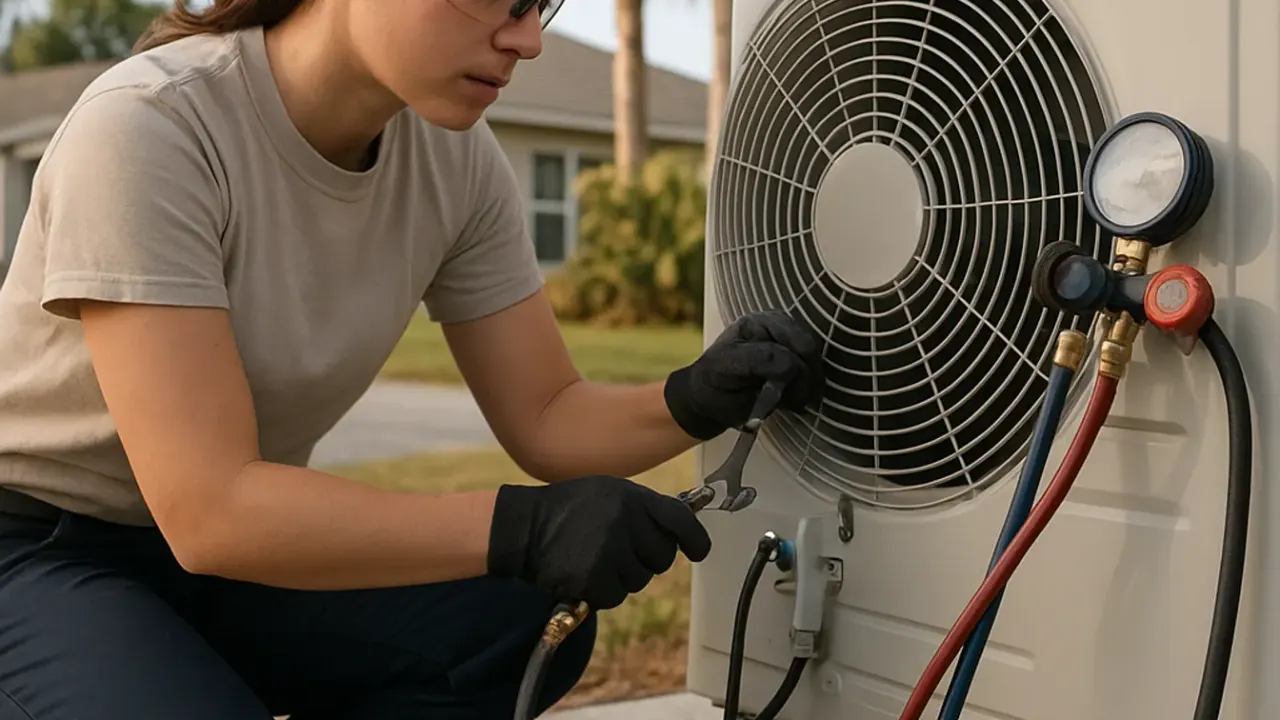
An HVAC Inspection in jacksonville is the fastest way to find out why your system is running hot, short-cycling, or costing you more every month. We send NATE-certified techs into homes and businesses across Duval County with manifold gauges, leak detectors, and inspection cameras to check the whole system, not just the filter. If you have been putting off a hvac checkup jacksonville FL, this is the season to book one.
Service overview
What an HVAC Inspection in jacksonville Actually Covers
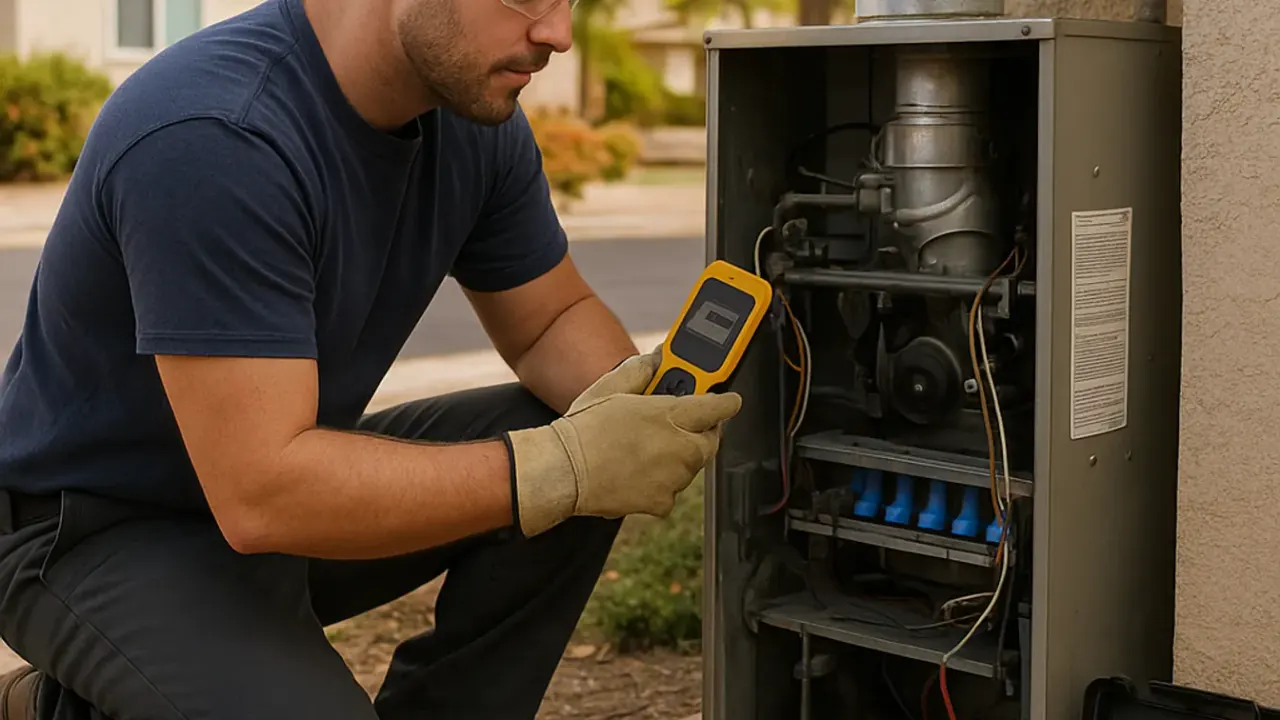
An HVAC Inspection in jacksonville is a top-to-bottom evaluation of your heating and cooling system that measures refrigerant charge, static pressure, airflow, electrical draw, and duct condition while the equipment is running under real load. We connect manifold gauges to the service ports, read amp draw at the compressor and blower with a clamp meter, and use a leak detector on every joint and coil. You get a written report with photos, not a sales pitch.
Jacksonville systems work harder than almost anywhere else in Florida. Summer heat indexes push past 105 degrees, humidity sits above 70 percent for months, and the salt air near the Beaches corrodes coils and contacts faster than inland. That is why an annual hvac inspection jacksonville homeowners schedule in spring catches refrigerant leaks and clogged condensate drains before July. If you searched hvac inspection jacksonville FL near me, we cover every ZIP from 32224 to 32221 and beyond.
Practical benefits
Why Jacksonville Homeowners Book This Inspection
A proper inspection is the cheapest repair you will ever pay for. Here is what you actually get when we walk through your door.
Catch Failures Early
A weak capacitor or a compressor pulling 15 percent over rated amps shows up on our meter long before it quits. Replacing a $30 capacitor during an inspection beats a $2,400 compressor replacement in August. We flag every component that is drifting out of spec.
Cut Summer Power Bills
Dirty evaporator coils and duct leakage force your system to run longer to hit the thermostat setpoint. After sealing ducts and correcting charge on a 3-ton unit, most Jacksonville homeowners see 10 to 18 percent lower cooling costs. We measure static pressure before and after so you see the number.
Extend Equipment Life
A Carrier or Trane condenser is built to last 15 years, but only with clean coils, correct refrigerant charge, and a blower that is not fighting restricted return air. Annual inspections routinely add 3 to 5 years to a system's service life, which pushes your replacement date out by thousands of dollars.
Breathe Cleaner Air
We pull the blower door and inspect the evaporator cabinet for biological growth, then check your flex duct and sheet metal duct for tears that pull attic air into the supply. In Duval County humidity, that hidden moisture is the number one cause of musty odors and allergy complaints.
How service works
What to Expect During Your Inspection
We block two to three hours for a standard residential inspection. Here is exactly how the visit runs, from the phone call to the report in your inbox.
STEP 01
Book the Visit
Call (312) 638-0812 or book online. We confirm a two-hour arrival window and text you when the tech is 30 minutes out. Same-day and next-day slots are usually open, and we run 24/7 for emergency calls.
Tools and methods
Tools and Methods We Use
Manifold Gauges
Used to read high-side and low-side pressures and calculate superheat and subcooling against manufacturer charging charts for R-410A and R-32 systems.
Clamp Meter and Multimeter
Measures amp draw at the compressor, blower motor, and condenser fan, and tests capacitors, contactors, and control voltage under real operating load.
Electronic Leak Detector
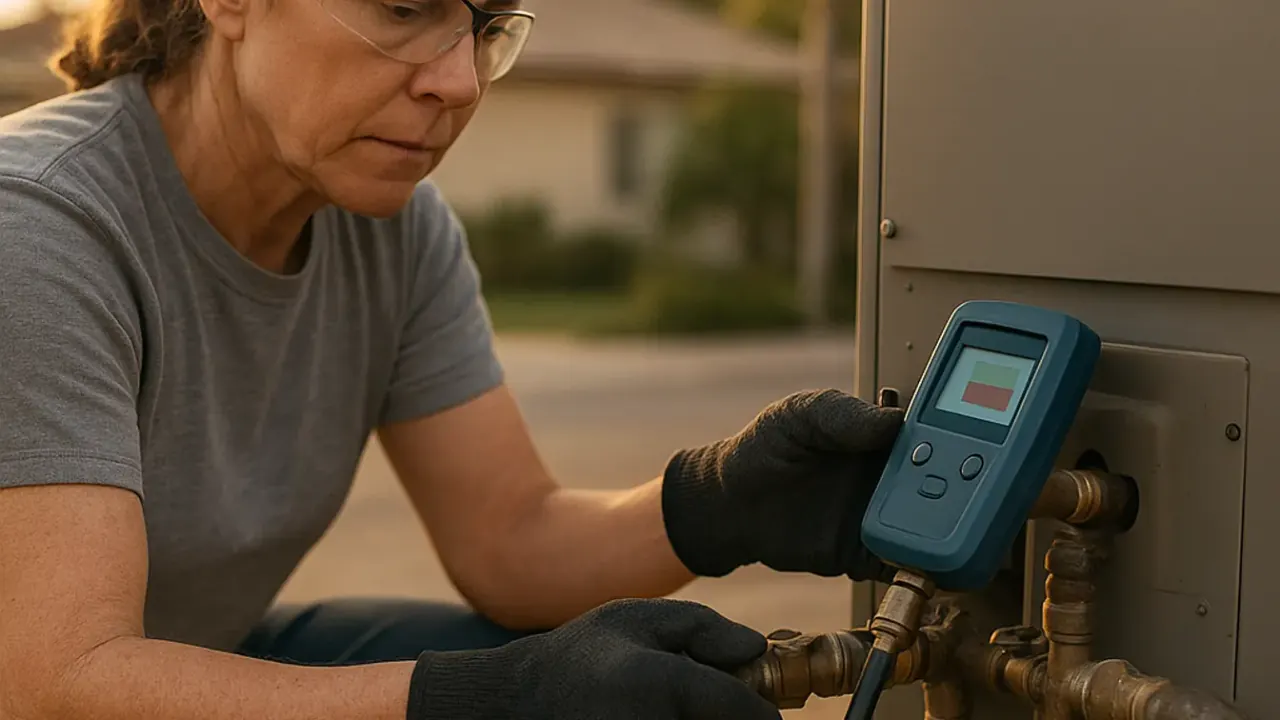
Sweeps braze joints, coil faces, Schrader ports, and line set connections to pinpoint refrigerant leaks that pressure readings alone cannot localize.
Inspection Camera
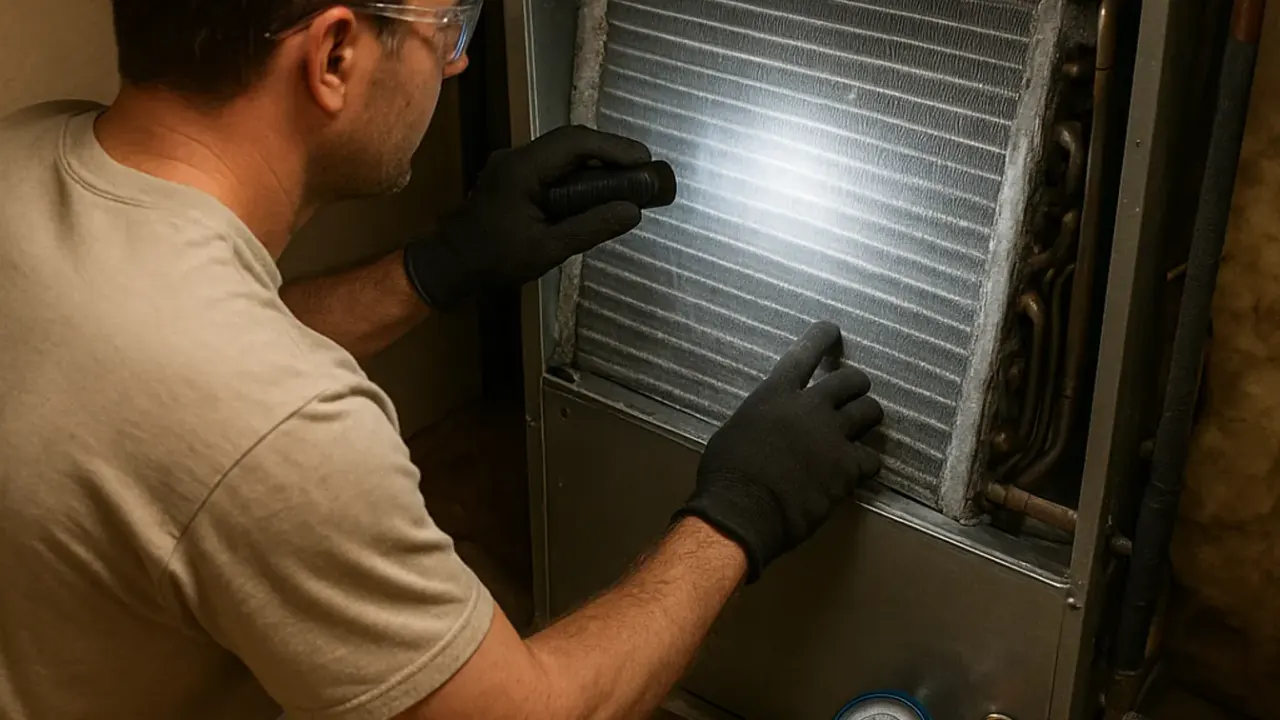
Slides into the plenum and evaporator cabinet to check for biological growth, coil damage, and debris that is not visible from the access panel.
Anemometer
Measures supply and return airflow at registers to confirm the system is moving the CFM its tonnage requires and to spot blocked or disconnected runs.
Duct Blaster
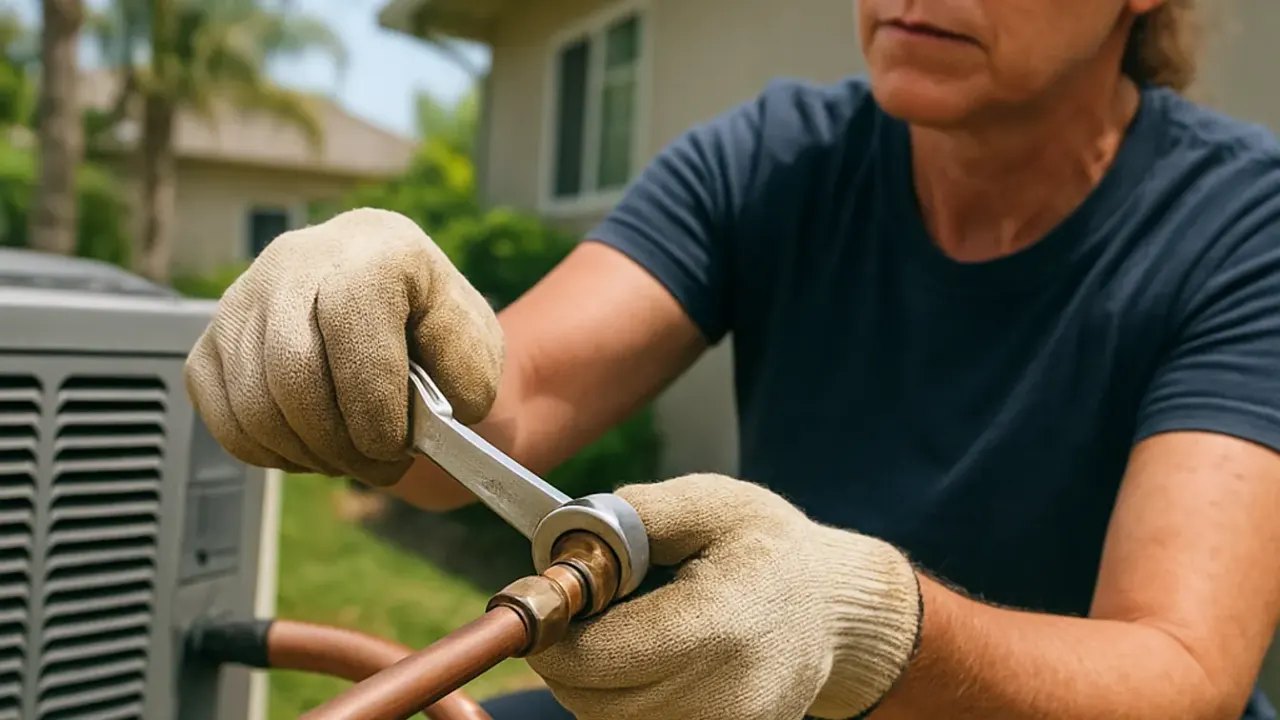
Pressurizes the duct system to measure total leakage in CFM, giving a before-and-after number when we seal joints and boots.
Vacuum Pump and Recovery Machine
Used when a repair requires opening the sealed system, so refrigerant is recovered per EPA Section 608 rules and the system is evacuated to 500 microns before recharge.
ACCA Manual J Load Calculation
We use Manual J when sizing replacement equipment or evaluating whether an existing system is correctly matched to the home. It accounts for square footage, insulation, window orientation, and Jacksonville design temperatures.
ACCA Manual D Duct Design
Manual D governs duct sizing and layout. We apply it when static pressure is high or when a duct repair or replacement is needed, so the system gets the airflow it was built for.
EPA Section 608 Refrigerant Handling
Every technician follows Section 608 rules for recovery, recycling, and charging. That means no venting, proper evacuation, and documented charge weights on every repair.
NATE Certification Standards
Our diagnostic sequence follows NATE testing standards for air conditioning and heat pump service, which keeps our measurements consistent from tech to tech and visit to visit.
AHRI Matched-System Verification
When we recommend a replacement, we verify the condenser, coil, and air handler are an AHRI-matched combination so you get the rated efficiency and the manufacturer warranty stays intact.
Where this service fits
When to Schedule an HVAC Inspection
You are buying a home in Riverside, Avondale, or San Marco and the seller's disclosure says the system is original.
We perform a full hvac inspection before buying house jacksonville buyers rely on, covering charge, electrical components, duct condition, and remaining equipment life. You get photos and model numbers to take back to the negotiating table. You know whether the system has two years left or ten, and you can ask for a credit or budget for replacement with real numbers instead of guesses.
Your summer power bill jumped $80 and the house never feels as cool as it used to.
We check refrigerant charge, static pressure, coil cleanliness, and duct leakage to find where the efficiency went. Often it is a combination of a slightly low charge and a dirty evaporator coil. After corrections, most customers see cooling costs drop back toward normal and the house holds setpoint through the afternoon.
Your system is 10 years old and you want to know whether to repair or replace before next summer.
An inspection gives you measured readings on the compressor, blower, and coils, plus a remaining life estimate. We compare repair cost against replacement cost with ACCA Manual J sizing for a new unit. You make the repair-or-replace decision on data instead of a salesperson's opinion, and you avoid an emergency replacement in July.
You rent out a duplex in Murray Hill or Orange Park and want documentation between tenants.
We inspect the system after each turnover, document condition with photos and readings, and flag anything a tenant could have damaged. The report goes into your property file. You have dated proof of system condition, which protects your deposit position and keeps small issues from becoming emergency calls.
Local execution
How HVAC Inspection Works in Jacksonville
Jacksonville sits in a hot-humid climate zone, and that shapes everything we check. Cooling season runs from April through October, humidity stays high enough to feed mold in ductwork and drain pans, and the salt air near Jacksonville Beach and Atlantic Beach corrodes condenser coils and electrical contacts years before inland systems show the same wear. Building stock matters too: Riverside and Springfield have 1920s to 1950s homes with undersized returns and original sheet metal duct, while Nocatee and Bartram Park have tightly built homes with sealed attics and variable-speed equipment that needs different diagnostics. We adjust the inspection accordingly. On older homes we spend more time on duct leakage and return sizing. On newer homes we focus on charge, control boards, and communicating thermostat faults. If you are scheduling an annual hvac inspection jacksonville homeowners book in spring, we will also check the condensate system and attic insulation before the first 95-degree week. Duval County permits and Florida HVAC contractor licensing rules apply to any repair we recommend, and we handle the paperwork when a permit is required.
Riverside and Avondale
Historic homes here often have original sheet metal duct with leaks at every joint and return air paths that were never sized for modern equipment. Duct leakage testing matters more than charge readings on some of these.
Mandarin and Julington Creek
Large lots mean long duct runs and more attic heat gain. We see crushed flex duct and disconnected boots regularly, especially on second-floor systems.
Jacksonville Beach and Neptune Beach
Salt air accelerates corrosion on condenser coils, contactors, and cabinet screws. We inspect coil fins and electrical connections closely on every beachside visit.
Nocatee and Bartram Park
Newer construction with sealed attics and variable-speed systems. Diagnostics focus on charge, communicating thermostat faults, and static pressure in tightly designed duct systems.
Summer heat indexes above 105 degrees
Systems run near continuous duty from June through September, which exposes weak capacitors, low charge, and restricted airflow faster than milder climates would.
Year-round humidity above 70 percent
Condensate drains clog with algae quickly, and any duct leakage pulls moist air into the supply. We check drains and duct seals on every inspection.
Salt air near the coast
Condenser coils and electrical contacts corrode faster in beachside ZIPs. We recommend more frequent coil rinses and contact inspections for homes east of the Intracoastal.
Mixed building stock from 1920s to new construction
Inspection priorities shift by age: duct and return sizing on older homes, charge and controls on newer ones. We tailor the visit to the house, not a script.
Problems we solve
Problems Our Jacksonville HVAC Inspection Solves
Most system failures start as small readings that nobody checks. Here are the issues we catch most often on Jacksonville inspections and what happens if they go ignored.
Refrigerant leak draining charge slowly
We sweep every braze joint and coil face with a leak detector, confirm the location with pressure testing, and repair the leak before recharging with R-410A to factory spec. Most leak repairs are completed in one visit. The system runs longer to hit setpoint, the compressor overheats, and a $400 leak repair turns into a $2,400 compressor replacement within a season.
Clogged condensate drain overflowing
We flush the PVC condensate lines, clear the trap, and verify slope and termination point. If the drain is undersized or improperly pitched, we correct it so the pan stays dry through the wettest months. Water backs up into the drain pan and eventually into your ceiling, drywall, or closet floor. In Jacksonville humidity, algae grows in the trap within months.
Duct leakage in a 130-degree attic
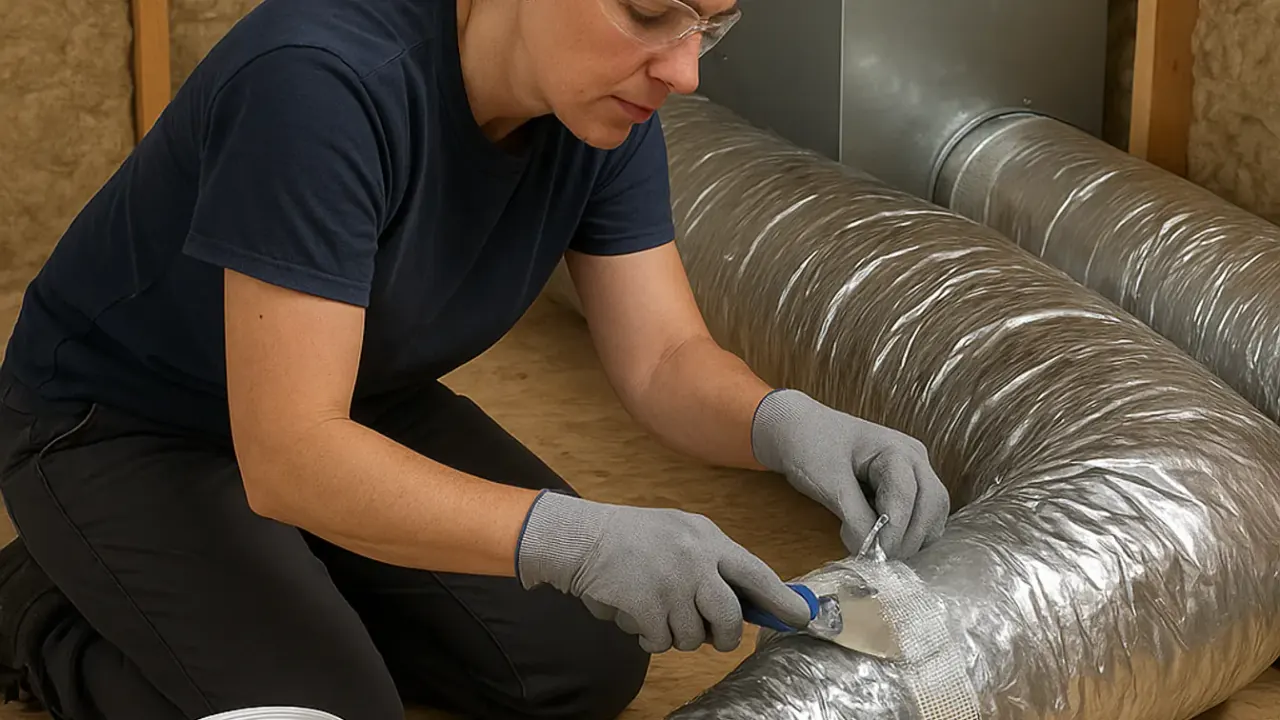
A duct blaster test measures the leak rate, and we seal accessible joints, boots, and plenum connections with mastic and mesh. Most homes see a measurable static pressure drop and better room-to-room balance. Leaky ducts pull superheated attic air into your supply, so your system runs 20 to 30 percent longer and rooms never reach setpoint. Energy bills climb every summer.
Failed capacitor or contactor on a hot afternoon
We test capacitors and contactors under load during every inspection and replace weak ones before they fail. Our vans carry common ratings for Carrier, Trane, Goodman, and Rheem so the fix happens on the spot. The compressor will not start, the breaker trips, and you are calling for emergency service in the worst heat of the year. These parts fail more often in Florida than almost anywhere.
A practical standard for every visit.
Clear planningPrepared arrivalsCareful workLocal follow-through
Experience in the details
Eight Years of Jacksonville HVAC Experience
AirCrest Jacksonville HVAC has been inspecting and servicing systems in Duval County since 2018. Our techs hold NATE certification and EPA Section 608 Universal cards, and we follow ACCA Manual J and Manual D when we evaluate load and duct design. That matters here because Jacksonville homes range from 1950s bungalows in Riverside with undersized returns to new builds in Nocatee with sealed attics and variable-speed equipment. We have inspected thousands of systems across that range, from Goodman builder-grade units to Mitsubishi Electric ductless heads, and we know what fails first in this climate.
- NATE-certified technicians and EPA Section 608 Universal refrigerant handling on every call
- Florida HVAC contractor license held by the company, fully insured and bonded
- ACCA Manual J load checks and Manual D duct evaluations available on request
- Experience with Carrier, Trane, Lennox, Goodman, Rheem, York, Daikin, and LG equipment
- AHRI certification standards used when matching components and verifying performance
Where we work
One local team. A lot of ground covered.
Downtown JacksonvilleRiversideAvondaleSan MarcoSpringfieldOrtegaMandarinSouthsideArlingtonNorthsideWestsideBeaches
Check my address Notes from local customers
What Jacksonville Customers Say
Our 12-year-old Trane was cooling but the upstairs never got comfortable. The inspection found a crushed flex duct and a system running 8 degrees low on subcooling. They fixed both the same day and the upstairs finally matches the downstairs. The report had photos of everything, which I appreciated.
We were buying a 1948 bungalow and needed a home hvac inspection jacksonville FL before closing. The tech found a refrigerant leak at the evaporator and a condensate drain that had been draining into the crawlspace. That report gave us real negotiating power and probably saved us $3,000.
I manage six rental units near Baymeadows and use AirCrest for annual inspections on all of them. They show up when they say, send the same report format every time, and flag problems before tenants call me at midnight. Two capacitors caught early last year saved me two emergency calls in July.
Most residential inspections run $99 to $249 in 2026, depending on system count and whether we are checking ducts and air quality. Commercial inspections and multi-unit properties are quoted per site. The fee covers the full diagnostic visit and written report, and we credit part of it toward any repair you approve the same day.
It includes refrigerant charge testing with manifold gauges, electrical checks on capacitors and contactors, airflow and static pressure readings, condensate drain inspection, duct condition review, and a thermostat calibration check. You get photos and measured values for each item, plus a plain-language summary of what needs attention now versus later.
Once a year for most homes, and twice a year if you have a heat pump that runs in both seasons. Spring is the best slot in Jacksonville because it catches refrigerant leaks and drain clogs before the summer load hits. If your system is over 10 years old or you have had two or more repairs in a year, we recommend a check every six months.
AirCrest Jacksonville HVAC does, and we cover every neighborhood from Downtown and Riverside to Mandarin, the Beaches, Orange Park, and Nocatee. Our techs are NATE-certified and EPA 608 certified, and we carry Florida HVAC contractor licensing. Call (312) 638-0812 to schedule, and we will confirm your ZIP and arrival window on the spot.
Keep exploring
Related HVAC Services We Offer
Your next step is waiting
Book Your HVAC Inspection in jacksonville Today
Same-day and next-day inspection slots are open across Duval County. Call (312) 638-0812 and we will confirm your arrival window, or book online in two minutes. Licensed, insured, and backed by our written report.
Start with the basics
call AirCrest Jacksonville HVAC
Call (312) 638-0812 and a live person answers, not a phone tree. We book same-day appointments across Jacksonville and Duval County, and our after-hours line stays open for emergencies. Tell us what the system is doing and we will load the right parts before the truck rolls.