How to keep your AC from breaking down in Jacksonville
Jacksonville heat and humidity punish neglected AC systems. Here is the maintenance schedule, warning signs, and local tips that keep yours running all summer.
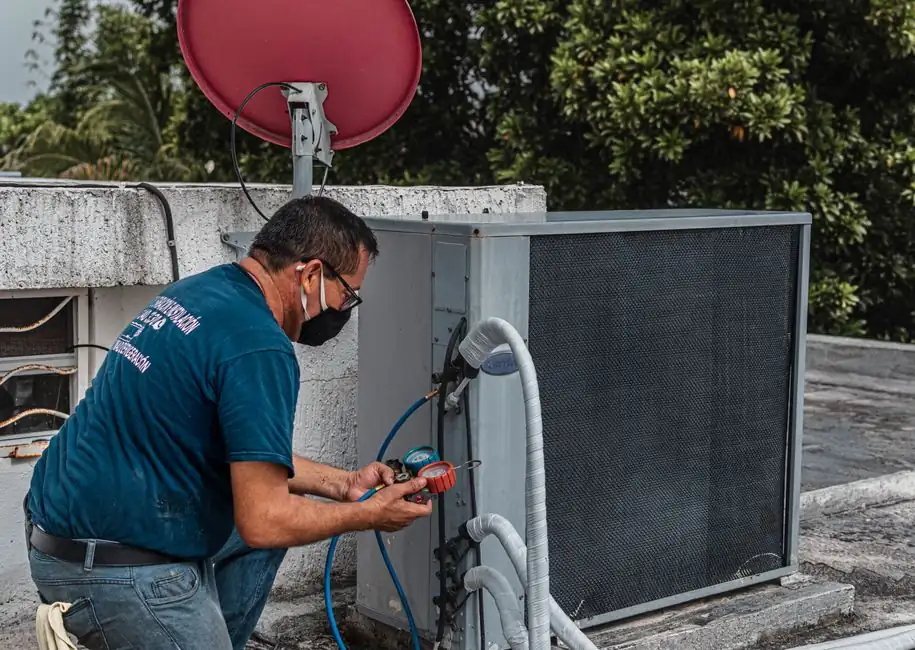
You keep your AC from breaking down in Jacksonville by changing the filter every 30 to 60 days, scheduling a spring tune-up before the first 90°F week, keeping the outdoor condenser clear, and fixing small issues like weak airflow or short cycling before they turn into a no-cool call in July. The rest of this post walks through the exact maintenance schedule we use on our own service calls, the Jacksonville-specific problems that kill compressors early, and the warning signs that mean you should shut the system off and call someone.
How to keep your AC from breaking down Jacksonville is really a question about heat, humidity, and salt air. Duval County runs 60 to 70 days a year above 90°F, and our average July dew point sits near 74°F. Your system is not just cooling air - it is pulling quarts of water out of it every day. That is a lot of work for a machine most homeowners never think about until it quits.
We are AirCrest Jacksonville HVAC, and we run service calls from the Beaches out to Mandarin and up to Northside. The systems that last 15 years here are not the most expensive ones. They are the ones that got a air conditioning maintenance jacksonville FL visit every spring and a filter change every month.
Why Jacksonville summers are hard on air conditioners
Jacksonville summers are hard on air conditioners because the combination of long cooling hours, high humidity, and airborne salt and pollen forces the system to run near its design limit for four straight months. A unit that would coast through a Chicago summer is running flat-out here from May through September.
Three local factors do most of the damage:
- Runtime. A Jacksonville AC typically runs 2,000 to 2,800 hours per cooling season. That is roughly double the national average, which means parts wear out on a compressed timeline.
- Humidity load. Every gallon of condensate your drain line carries away is heat your system had to move. In August, a 3-ton unit can pull 15 to 20 gallons a day.
- Coastal air. If you live east of the Intracoastal, salt aerosol settles on condenser coils and accelerates corrosion. We see coil fins rust through years earlier on the Beaches than in Orange Park.
None of that is a reason to panic. It is a reason to treat maintenance here as non-optional rather than nice-to-have.
The maintenance schedule that actually prevents breakdowns
The maintenance schedule that prevents AC breakdowns in Jacksonville is a spring professional tune-up, monthly filter changes, and a fall check before you switch to heat. Skip the spring visit and you are gambling on a capacitor or contactor failing on the hottest day of the year.
Here is the cadence we recommend to every homeowner we work with:
- March or April: Full professional tune-up. Coil cleaning, refrigerant charge check, capacitor and contactor testing, condensate drain flush, amp draw readings.
- Every 30 days, May through September: New filter. If you have pets or live near a construction site, every 3 weeks.
- Monthly, June through August: Five-minute homeowner walk-around - condenser clear, drain line flowing, no ice on the indoor coil.
- October or November: Fall check. Even though heating season is short here, your heat pump or furnace has been sitting idle for six months.
That spring visit is the single highest-return hour you can spend on your system. A hvac tune up jacksonville FL runs $89 to $189 in 2026 depending on system size and how many units you have. A compressor replacement runs $1,800 to $2,900. The math is not close.
What a real tune-up includes
Not every "tune-up" is the same. Ours takes 60 to 90 minutes and covers 22 checkpoints. The ones that actually prevent breakdowns are capacitor microfarad testing, contactor pitting inspection, subcool and superheat readings, condensate trap cleaning, and a full wash of the outdoor coil. If a company is in and out in 20 minutes, they checked the filter and left.
What to check every month during cooling season
What you check every month during cooling season is airflow, drainage, and the outdoor unit - three things that cause the majority of mid-summer breakdowns. None of them take more than five minutes.
Airflow. Pull the filter and hold it up to a light. If you cannot see through it, replace it. A clogged filter drops airflow, which drops the evaporator coil temperature, which causes ice buildup and eventually a frozen system blowing warm air.
Drainage. Find the condensate drain line - usually a white PVC pipe near the indoor air handler. Pour a cup of water into the access tee. If it drains slowly or backs up, you are one humid week away from a water stain on your ceiling. A cup of white vinegar down the line monthly keeps algae from forming.
Outdoor unit. Clear leaves, grass clippings, and anything stacked within 24 inches of the condenser. We cannot count how many July no-cool calls we have run where the fix was moving a recycling bin off the unit. While you are out there, look at the coil fins. If they are matted with lint or salt-crusted, they need a wash.
If you are in an older home - a 1950s bungalow in Riverside or Avondale, for example - add one more check. Look at the return air grille. Older ductwork was sized for less airflow than a modern system needs, and a hvac duct sealing jacksonville FL job often does more for comfort than a new condenser.
How to maintain AC in Jacksonville humidity
How to maintain AC in Jacksonville humidity comes down to keeping the system running long enough to remove moisture, not just cool the air. A system that short-cycles will leave your house at 74°F and 68% relative humidity - cool and clammy.
Two adjustments matter more than anything else here:
Do not oversize. The most common mistake we see in Jacksonville is a contractor installing a 4-ton unit where a 3-ton was specified. It cools the house fast, then shuts off before it has pulled the moisture out. The result is a house that feels damp and a compressor that cycles 8 to 10 times an hour instead of 3 or 4.
Run the fan on auto, not on. Setting the thermostat fan to "on" keeps air moving but re-evaporates moisture off the coil and pushes it back into your house. Auto lets the coil drain between cycles.
If your home still feels sticky at 72°F, the issue may be duct leakage pulling humid attic air into the supply. We test for that with a duct pressure gauge on every hvac inspection jacksonville FL visit. A 20% duct leak in a Jacksonville attic is common and it costs you both comfort and money.
Warning signs you should not ignore
The warning signs that should make you shut the system off and call a technician are ice on the indoor coil, a burning smell, repeated tripped breakers, and a compressor that hums but will not start. Each of those points to a specific failure that gets more expensive the longer it runs.
Here is how we triage them:
- Ice on the indoor unit or refrigerant lines. Shut it off. Running a frozen system can slug liquid refrigerant back to the compressor and destroy it. Thaw it, change the filter, and call us.
- Burning or hot-plastic smell. Shut it off at the breaker. That is a failing motor, contactor, or wiring insulation.
- Breaker trips when the AC starts. Usually a failing compressor or a shorted condenser fan motor. Do not keep resetting it.
- Hums but does not start. Nine times out of ten it is a $25 capacitor. Left alone, it becomes a $2,000 compressor.
- Water around the indoor unit. Clogged condensate drain. Cheap to fix now, drywall repair later.
- Cooling that takes more than 20 minutes to drop the house 2°F. Low refrigerant or a dirty coil. Both get worse.
One more: if your system is 12 years or older and you are calling for repairs twice a season, you are renting a dying machine. At that point a air conditioning installation jacksonville FL conversation makes more sense than another $600 repair.
Common mistakes that shorten AC life in Jacksonville
The mistakes that shorten AC life in Jacksonville are almost always about airflow, thermostat habits, or skipping the spring visit. Fix those three and you will get years more out of the same equipment.
Running cheap filters for too long. A $4 fiberglass filter is basically a dust screen. It catches almost nothing and lets the coil foul. Spend $15 to $25 on a pleated MERV 8 to MERV 11 filter and change it monthly in summer.
Closing vents in unused rooms. This raises static pressure in the duct system and reduces total airflow across the coil. It does not save money. It causes freeze-ups.
Setting the thermostat back 10°F during the day. In Jacksonville humidity, a big setback lets the house get muggy, then forces a long recovery run when you get home. A 3°F to 4°F setback is the sweet spot.
Never washing the outdoor coil. Two years of pollen, grass, and salt on a condenser coil can cut its capacity by 15% to 20%. A garden hose - not a pressure washer - once a year does the job.
Ignoring the drain line. The number one cause of water damage claims we see from HVAC systems in Jacksonville is a clogged condensate drain. It costs nothing to flush. It costs $400 to $1,200 to repair the ceiling it ruined.
When to call a professional
Call a professional when you see ice, smell burning, hear a compressor humming without starting, or when your system has not had a tune-up in over 12 months. Those are the calls where a $150 visit prevents a $2,000 failure.
We handle the whole list - spring tune-ups, refrigerant charge corrections, capacitor and contactor replacement, duct sealing, and full system diagnostics. When we come out, we test the system, tell you what we find, and quote the repair before we start. No surprises on the invoice.
If you are not sure whether your issue is urgent, call us anyway. We would rather talk you through a five-minute filter check than have you wait three days and lose the compressor. AirCrest Jacksonville HVAC serves the entire metro - from residential hvac services jacksonville FL for single-family homes to light commercial work.
Frequently Asked Questions
How do I keep my AC from breaking down in Jacksonville?
Change the filter every 30 days in summer, get a professional tune-up every spring, keep the outdoor unit clear of debris, and flush the condensate drain monthly. Those four habits prevent the majority of mid-summer breakdowns we see in Jacksonville.
How often should I service my AC in Jacksonville?
Service your AC once a year at minimum, ideally in March or April before the cooling season starts. If your system is over 10 years old or you have pets, twice a year - spring for cooling and fall for the heating side - is better.
What maintenance prevents AC breakdown in Jacksonville?
The highest-value maintenance is a spring tune-up with coil cleaning, capacitor testing, and refrigerant charge verification. Add monthly filter changes and a condensate drain flush. Together those prevent frozen coils, drain overflows, and hard-start compressor failures.
When should I schedule AC maintenance in Jacksonville?
Schedule it in March or April, before the first 90°F week. Jacksonville HVAC companies book out two to three weeks by May, and emergency calls in July can take 24 to 48 hours during a heat wave. Spring scheduling gets you same-week service.
How long should a Jacksonville AC last?
A well-maintained AC in Jacksonville lasts 12 to 15 years. Coastal homes often see 10 to 12 because of salt corrosion on the condenser coil. Annual tune-ups and coil rinses are the difference between the two ranges.
Get help with hvac in jacksonville
If your system is due for a tune-up or you are hearing something that does not sound right, we can take a look before it turns into a July emergency. AirCrest Jacksonville HVAC handles maintenance, repair, and replacement across Duval and the surrounding counties.
Call us at (312) 638-0812 to schedule your spring AC tune-up or a same-day diagnostic.